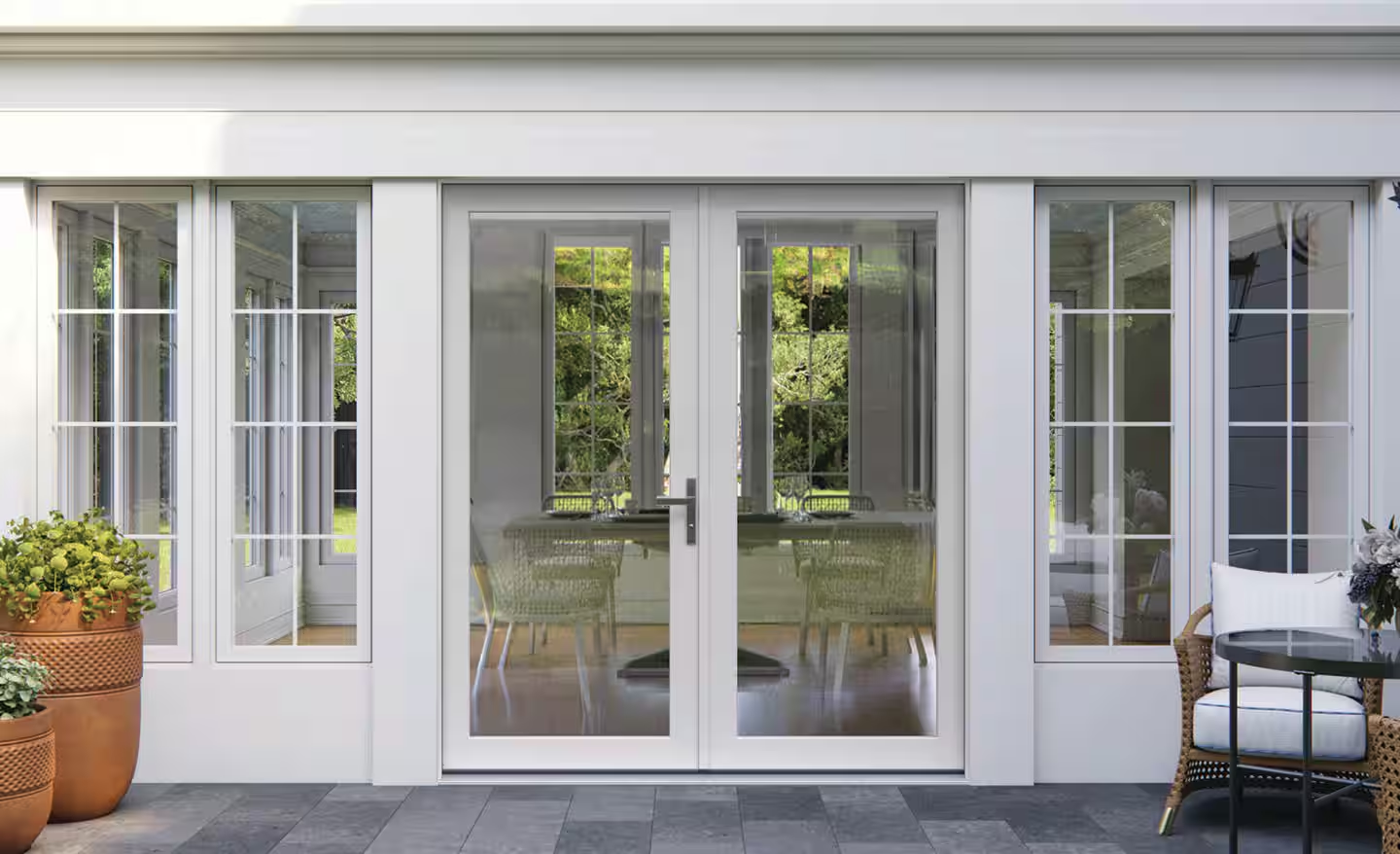
Patio Doors Guide: Installation, Measurements, Security, and Window Treatments
Planning a renovation or building from scratch requires careful attention to every architectural element, and your transition between indoor and outdoor living spaces deserves special consideration. This resource walks you through essential sizing knowledge, expert installation methods, protective enhancements, and aesthetic covering solutions. At Extollo Construction, we've assembled decades of field experience into this practical reference to support your decision-making process.
Understanding Patio Door Dimensions
How Wide Are Patio Doors?
Sliding two-panel configurations generally span 60 to 72 inches across. French-style alternatives measure anywhere from 60 to 96 inches in total width. When you expand to three-panel sliding arrangements, expect widths between 108 and 144 inches. Four-panel systems can stretch up to 192 inches. How wide are patio doors for your specific project depends entirely on your available wall space and desired opening clearance.
How Tall Are Patio Doors?
The majority of manufactured units measure 80 inches vertically, matching conventional interior passage heights. Manufacturers also produce 84-inch and 96-inch variants for residences featuring elevated ceilings. How tall are patio doors when custom-fabricated? Vertical dimensions can exceed 10 feet for striking architectural focal points. Your ceiling clearance and structural header positioning will dictate the maximum achievable height.
Standard Patio Door Sizes
Two-panel sliding arrangements most commonly measure 60×80 or 72×80. Three-panel systems frequently come sized at 108×80 or 144×80. Four-panel configurations span from 144×80 up to 192×80. French-style pairs typically measure 60×80 or 72×80. Selecting these pre-established dimensions delivers better pricing and faster delivery schedules from virtually all suppliers.
Custom vs Standard Sizing Options
Numerous property owners discover their existing wall openings fail to align with pre-set measurements. Bespoke fabrication becomes essential when addressing heritage properties, distinctive architectural features, or precise aesthetic visions. Pre-made units typically ship within fourteen days, whereas custom orders may demand six to twelve weeks for manufacturing completion.
Price Comparison: Pre-Made vs. Bespoke Configurations:
Sliding (2-panel) doors are the most affordable option in both categories. Pre-made versions cost $800–$2,500, while bespoke configurations range from $1,500–$4,000. Custom orders require an additional 4–8 weeks of lead time beyond standard delivery.
French doors fall into the mid-range price tier. Pre-made options are priced at $1,200–$3,500, whereas bespoke versions cost $2,000–$6,000. Choosing custom French doors adds 4–10 weeks to the project timeline for manufacturing and delivery.
Bi-fold doors represent the premium category with the highest investment. Pre-made configurations cost $3,000–$8,000, while bespoke versions range from $5,000–$15,000. Custom bi-fold systems require the longest additional lead time at 6–12 weeks, reflecting their complex engineering and precise manufacturing requirements.
The price differential between pre-made and bespoke options reflects customization for specific dimensions, upgraded materials, specialized finishes, and unique design features. The extended lead times for custom work account for design consultation, precise measurements, specialized manufacturing, and quality control processes.
Bespoke fabrication typically commands 30–60% higher pricing than pre-made alternatives. Nevertheless, custom manufacturing delivers an exact fit that eliminates shimming difficulties and guarantees superior weather protection. For properties with unusual openings, this additional investment frequently proves justified.
How Do You Measure Patio Doors?
Tools and Preparation for Measuring
Assemble a steel measuring tape (25 feet minimum), a spirit level, writing materials, and a pencil before beginning. How do you measure patio doors with precision? First, strip away any existing window treatments and establish clear access around the entry point. Confirm the current frame maintains proper level and plumb alignment. Record every dimension in inches, and verify each measurement twice for accuracy.
Step-by-Step Measurement Guide
Capture width readings at three positions: top, center, and bottom of the opening. Document the narrowest reading obtained. Subsequently, record height at the left edge, middle, and right edge—once again noting the smallest figure. Conclude by measuring frame depth from exterior face to interior face. These three core dimensions establish your ordering specifications.
Measuring for Replacement Patio Doors
Interior frame-to-frame readings capture the existing unit's inside boundaries. To obtain rough opening dimensions, carefully detach interior trim molding to reveal the structural framing. Take diagonal measurements from opposing corners in both directions; these figures should align within 1/4 inch. Greater variance signals an out-of-square condition requiring correction.
Measuring for Window Treatments
Mounting elevation and bracket positioning directly influence treatment installation success. Record the distance from your intended bracket location downward to your preferred ending point. Incorporate 4–6 additional inches above the frame for a visually elevated presentation. Note the complete span including any adjacent wall coverage beyond the frame boundaries.
What Size Curtains for Patio Doors?
What size curtains for patio doors deliver the best appearance? Choose fabric panels measuring 1.5 to 2 times the opening width for adequate fullness. For a 72-inch opening, two 54-inch panels create excellent visual coverage. Panel length should graze the floor or pool softly beneath. Position mounting hardware 4–6 inches above the frame and extend rods 3–6 inches past each edge.
Common Measurement Mistakes to Avoid
Too many homeowners record dimensions only once or mistakenly use incorrect measurement units. Never presume opposing edges of an opening share identical measurements. Overlooking square verification generates significant installation complications afterward. Recording measurements over existing trim instead of exposing raw framing results in ordering incorrectly sized units. Confirm all figures before submitting purchase orders.
How Much Are Patio Doors?
Average Patio Door Costs by Type
How much are patio doors across various configurations? Entry-level vinyl sliding units begin around $700–$1,500. Mid-range French varieties typically fall between $1,200–$4,000. Bi-fold arrangements generally command $3,000–$10,000 based on span. High-end multi-slide configurations fetch $5,000–$20,000 or beyond. These figures represent unit pricing exclusively, excluding labor charges and supplementary hardware.
Factors That Affect Patio Door Pricing
Your material selection dramatically shapes total expenditure. Vinyl represents the most budget-conscious selection, while fiberglass offers enhanced longevity at moderate pricing. Wood provides timeless beauty yet demands ongoing upkeep. Aluminum complements contemporary aesthetics and withstands coastal climates admirably. Panel configuration, hardware grade, and finish preferences further determine your overall investment.
Installation Costs and Labor
Expert installation generally adds $300–$1,000 for conventional sliding configurations and $500–$1,500 for French varieties. Complicated projects involving structural alterations, expansive multi-panel arrangements, or upper-level placements elevate labor expenses considerably. Extollo Construction delivers comprehensive estimates addressing your unique project specifications and jobsite circumstances.
Energy-Efficient Upgrades and Costs
Selecting efficiency-focused features increases upfront expenditure yet produces meaningful long-term savings. Low-E coatings deflect thermal energy while permitting light passage. Dual-pane assemblies deliver baseline insulation, while triple-pane setups maximize thermal resistance for harsh climates.
Energy-Focused Enhancement Selections:
Low-E coating application: adds $50–$150 per unit
Argon fill between panes: adds $30–$75 per unit
Triple-pane assembly: adds $150–$400 per unit
Warm-edge spacer technology: adds $25–$50 per unit
Thermally broken frames: adds $100–$300 per unit
Property owners generally recoup efficiency enhancement expenses within 3–7 years through diminished heating and cooling bills. Furthermore, these upgrades enhance occupant comfort by eliminating temperature variations and minimizing condensation formation.
Budget vs Premium Options
Entry-tier units fulfill fundamental requirements with baseline features and restricted warranty terms. These selections suit investment properties or cost-sensitive undertakings adequately. Premium selections incorporate superior construction materials, sophisticated weatherproofing, strengthened security elements, and extensive warranty protection. For owner-occupied residences, premium investments typically yield superior lifetime value through extended durability and thermal performance.
How to Install Patio Doors
Preparation and Planning
Achieving successful installation demands comprehensive preliminary work. Confirm your opening measurements align precisely with unit specifications. Unpack completely and examine thoroughly for shipping damage. Assemble required implements and supplies in advance. Establish an unobstructed workspace and shield flooring with protective coverings. How to install patio doors correctly begins with meticulous preparation.
Step-by-Step Installation Process
Position the frame assembly within the opening and verify level conditions across the header and threshold. Place shims behind each factory-drilled fastener location. Secure fasteners through the frame into the rough opening, rechecking level and plumb after each attachment. Apply expanding foam insulation throughout the perimeter cavity. Attach interior and exterior trim components to achieve the completed appearance.
Tools and Materials Required
Fundamental implements include a power drill/driver, spirit level, measuring tape, wood shims, minimal-expansion foam, sealant, and appropriate fasteners. Additionally, gather a pry bar for extraction tasks, a circular saw for trim fabrication, and a hammer. Protective gear should encompass work gloves, safety eyewear, and hearing protection. Maintain manufacturer-supplied hardware and documentation within easy reach throughout the project.
Proper Sealing and Insulation Techniques
Lay a continuous sealant bead beneath the threshold prior to positioning the unit. Utilize minimal-expansion foam for cavity filling between frame and rough opening—avoid high-expansion varieties, which can distort frames. Apply weatherstripping per manufacturer guidelines. Seal every exterior trim connection with premium-grade exterior sealant to guard against moisture penetration.
How to Insulate Patio Doors
Existing installations frequently benefit from thermal performance enhancements. How to insulate patio doors successfully encompasses multiple strategies. Swap deteriorated weatherstripping around the complete perimeter. Install V-strip sealing material along meeting rails of sliding assemblies. Add threshold sweeps where gaps appear beneath the sill. Explore thermal window coverings for supplemental insulation value.
DIY vs Professional Installation
Capable homeowners can accomplish standard sliding unit installation by following manufacturer guidance carefully. Conversely, French configurations, multi-panel arrangements, and structural modifications generally demand professional expertise. Improper installation invalidates warranty coverage and generates persistent performance issues. When uncertainty exists, professional installation safeguards your financial investment.
How to Remove Patio Doors
Safety Considerations and Preparation
Panel manipulation creates the primary injury hazard during extraction projects. Utilize heavy-duty gloves, long-sleeved garments, and protective eyewear throughout the procedure. Arrange for an assistant to help manage weighty components. How to remove patio doors without incident requires clearing the workspace entirely and positioning protective materials to capture falling debris. Extollo Construction recommends applying tape in an X pattern across each panel to contain fragments should breakage occur.
Step-by-Step Removal Process
Begin by extracting individual panels before tackling the frame structure. For sliding configurations, elevate the movable panel upward into the header track, then angle the base outward. Fixed panels generally release once interior stop molding is detached.
Frame Extraction Procedure:
Detach all interior and exterior trim elements
Slice through sealant and caulking using a sharp utility knife
Extract visible fasteners anchoring the frame to rough framing
Sever concealed nails employing a reciprocating saw
Gently lever the frame structure away from the opening
Clear residual shims and construction debris
Dispose of removed frame assemblies and hardware appropriately. Examine the rough opening thoroughly for decay, structural compromise, or insect activity before advancing to new installation.
How to Replace Patio Doors with French Doors
Transitioning from sliding to swing-style configurations demands thorough advance planning. How to replace patio doors with French doors effectively requires confirming your opening can accommodate the intended swing orientation. French configurations necessitate unobstructed floor clearance matching panel width. Structural headers typically need no modification, though threshold adjustments may become necessary. Engage professional contractors for conversions affecting electrical systems or load-bearing elements.
Disposal and Recycling Options
Numerous municipal authorities accept removed units through scheduled bulk collection programs. Panels merit transport to specialized recycling operations whenever feasible. Metal frame assemblies frequently hold value at scrap processing facilities. Wooden frames in serviceable condition may gain renewed purpose through charitable building material outlets. Consult local waste management authorities for region-specific disposal protocols.
How to Secure Patio Doors
Common Security Vulnerabilities
Sliding configurations present multiple security weaknesses demanding homeowner attention. Conventional latching mechanisms yield to basic manipulation techniques. Expansive panels create conspicuous intrusion opportunities. Numerous units lift directly from tracks absent proper anti-lift protection. How to secure patio doors effectively starts with recognizing these weak points and deploying suitable protective measures.
Security Hardware Upgrades
Multi-point engagement systems anchor to the frame at several positions, substantially boosting forced-entry resistance. Foot-activated locks at lower corners provide secondary defense layers. Reinforced strike plates featuring 3-inch fasteners replace inadequate factory hardware effectively. Interior key-operated mechanisms prevent unauthorized activation even when panels sustain damage.
Security Bars and Door Jammers
Telescoping security bars brace between the movable panel and opposing frame, blocking sliding motion entirely. Floor-anchored blocking devices deliver comparable protection with convenient quick-release functionality. Charley bars mount within the track at handle elevation for effortless daily use. These implements provide economical, reliable supplementary protection requiring no permanent alterations.
Impact-Resistant Glass Options
Laminated construction incorporates a polymer interlayer that maintains fragment cohesion upon impact, thwarting easy penetration. Tempered varieties fracture into small, comparatively harmless granules yet offer minimal penetration resistance. For ultimate protection, designate laminated-tempered assemblies combining both protective technologies. Impact-rated selections additionally deliver storm protection in hurricane-prone coastal areas.
Smart Lock and Alarm Integration
Contemporary entry points readily accept intelligent locking systems enabling remote surveillance and operation. Magnetic sensors connect with residential security networks to notify occupants of any activation. Acoustic sensors initiate alarms upon panel shattering events. Video monitoring equipment and surveillance cameras supplement visual confirmation capabilities. These technological solutions facilitate comprehensive security oversight from any location.
Security Film and Reinforcement
Protective window film adheres to surfaces and preserves fragment integrity upon impact. Commercial-grade films endure repeated strikes, creating valuable delay during intrusion attempts. Application demands careful surface conditioning and skilled installation for peak effectiveness. Although film cannot prevent shattering, it substantially hinders passage through compromised panels.
How to Cover Patio Doors
How to Cover Sliding Patio Doors
Sliding arrangements demand treatments permitting unimpeded panel travel. How to cover sliding patio doors optimally means choosing solutions that compress neatly when drawn open. Vertical blinds maintain popularity owing to smooth operation and thorough stacking capability. Track-mounted sliding panels offer a contemporary substitute. Traverse rod curtains perform excellently when sufficient adjacent wall space exists for fabric accumulation.
Types of Patio Door Window Treatments
Property owners may select among numerous covering categories. How to cover patio doors appropriately hinges on your priorities—seclusion, illumination management, thermal efficiency, or visual appeal. Curtain panels and draperies present boundless textile possibilities. Vertical and horizontal slatted blinds enable exact light adjustment. Honeycomb shades supply exceptional thermal buffering. Plantation shutters contribute architectural distinction. Track panels generate streamlined, contemporary aesthetics.
What Blinds Are Best for Patio Doors?
What blinds are best for patio doors differs according to individual taste and installation configuration. Vertical slatted blinds remain the traditional preference for sliding setups because of straightforward manipulation. Honeycomb shades in vertical mounting supply remarkable insulating characteristics. Panel track blinds complement modern interior schemes wonderfully. Roller varieties deliver uncluttered aesthetics across multiple opacity grades. Explore motorization for expansive installations.
How to Dress Patio Doors Without Curtains
Many property owners favor curtain-free approaches for uncluttered visual presentation. How to dress patio doors without curtains reveals abundant alternatives. Interior louvered shutters supply enduring architectural appeal. Privacy film generates obscured surfaces while preserving light transmission. Exterior screening or awning systems regulate thermal gain effectively. Ornamental grillework contributes character while integral blind systems eliminate dust collection concerns.
Motorized and Smart Window Treatment Options
Automated covering systems integrate with connected home platforms for effortless operation. Establish automated schedules adjusting treatments throughout daylight hours for peak energy management. Voice activation through leading virtual assistants permits hands-free manipulation. Remote connectivity enables modifications while traveling. Battery-operated variants streamline installation by bypassing electrical wiring demands.
Privacy and Light Control Solutions
Sheer vs Blackout Options
Translucent treatments soften intense sunlight while preserving exterior sightlines during daylight hours. They furnish limited evening seclusion when interior illumination activates. Opaque selections obstruct light transmission entirely, suiting sleeping quarters or entertainment spaces ideally. They guarantee complete seclusion around the clock. Extollo Construction can help you determine the best choice based on your room's function and specific requirements.
Top-Down Bottom-Up Shades
These adaptable coverings adjust independently from upper and lower edges. Lower the upper section for ambient light while preserving seclusion below sightline elevation. Elevate the lower portion conventionally for maximum light admission. This versatility proves especially advantageous for entry points where seclusion and illumination requirements shift throughout daily activities and seasonal changes.
Decorative Films and Frosted Glass
Adhesive films convert transparent surfaces into obscured finishes at minimal expense. Available patterns span basic frost effects through elaborate ornamental motifs. Films adhere directly to existing panels without requiring replacement. Certain varieties filter ultraviolet radiation while limiting visibility. For lasting solutions, factory-applied frosted or textured panels eliminate post-installation concerns completely.
Layered Window Treatment Approaches
Pairing multiple treatment categories supplies maximum adaptability for evolving circumstances. A representative layered configuration combines translucent curtains with substantial drapes or slatted blinds. This methodology accommodates diverse scenarios throughout everyday activities.
Advantages of Layered Treatment Systems:
Translucent layers alone for gentle daylight diffusion
Substantial layers alone for total light exclusion
Combined closure for peak insulation performance
Numerous partial arrangements for exacting adjustment
Amplified visual dimension and design refinement
Layered strategies do necessitate supplementary mounting hardware and elevated expenditure. Nevertheless, they deliver unparalleled functional adaptability and aesthetic sophistication for selective property owners.
Energy Efficiency and Insulation
Insulating Window Treatments
Honeycomb cellular shades capture air within chambered compartments, establishing effective thermal barriers. Thermal-backed curtains incorporate specialized linings reflecting radiant energy. Roman configurations with insulating linings combine elegance with efficiency. According to Extollo Construction, these treatments diminish thermal transfer through surfaces, reducing both heating and cooling expenditures year-round.
Weatherstripping and Draft Prevention
Examine weatherstripping yearly and swap deteriorated sections without delay. V-strip sealing material performs effectively along sliding meeting rails. Adhesive foam tape remedies gaps surrounding fixed frame elements dependably. Brush-style seals obstruct drafts beneath sliding panels without hindering travel. Maintaining proper weatherstripping substantially enhances both resident comfort and energy conservation.
Seasonal Adjustments for Efficiency
Throughout summer months, draw coverings across south and west exposures during peak thermal hours. Reflective films or exterior screening prevents thermal gain before interior penetration. During winter, expose south-facing treatments during sunny intervals to harvest solar warmth. Secure all treatments overnight to preserve interior warmth. These straightforward modifications support your climate control system's operational efficiency.
Energy Rebates and Incentives
Numerous utility providers extend rebates supporting efficiency-focused installations. Federal tax incentives may apply toward qualifying products and improvements. State and regional programs supplement available incentives across many jurisdictions. ENERGY STAR certified products satisfy rigorous efficiency benchmarks and routinely qualify for accessible programs. Investigate current offerings thoroughly before finalizing purchasing decisions.
Patio Door Styles and Design Options
Sliding vs French Patio Doors
Sliding arrangements conserve floor area since panels travel parallel along wall surfaces. They complement contemporary architectural vocabularies and constrained layouts perfectly. French configurations generate striking openings featuring traditional aesthetic appeal. They demand unobstructed swing clearance matching panel dimensions. Your determination depends upon available space, architectural vocabulary, and personal operational preference.
Bi-Fold and Multi-Slide Systems
Bi-fold assemblies collapse accordion-fashion generating expansive openings bridging interior and exterior living zones seamlessly. Multi-slide arrangements stack panels toward one or both flanks. These systems convert entire wall sections into operable passages. They command elevated pricing yet deliver incomparable indoor-outdoor lifestyle experiences supporting entertainment activities and everyday pleasure.
Frame Materials and Finishes
Vinyl framing supplies excellent value demanding minimal upkeep attention. Wood framing conveys timeless elegance yet necessitates periodic refinishing maintenance. Fiberglass contributes superior structural integrity and thermal characteristics. Aluminum complements contemporary motifs featuring slender sightlines. Clad constructions merge wood interiors with maintenance-minimal exterior cladding. Each material category presents distinct merits warranting careful evaluation.
Glass Options and Decorative Features
Transparent panels maximize scenic views and light admission without visual interference. Tinted varieties diminish glare and solar thermal gain effectively. Textured surfaces ensure seclusion while admitting diffused illumination. Divided lite patterns contribute traditional aesthetic character. Decorative treatments encompass beveled edging, etched artwork, and tinted accent elements for distinctive personalization.
Professional Patio Door Services
Why Choose Professional Installation
Seasoned installation specialists contribute focused expertise preventing expensive errors. Professional installation preserves manufacturer warranty terms that amateur efforts may nullify. Veteran crews accomplish projects efficiently generating minimal household disruption. Superior craftsmanship guarantees correct operation, weatherproofing integrity, and lasting security performance.
Free Consultation and Measurement
Our evaluation process commences with comprehending your objectives and aesthetic preferences. Certified specialists capture your opening dimensions precisely, removing sizing miscalculations. We assess structural circumstances and flag potential complications prior to work commencement. This comprehensive methodology ensures accurate cost projections and seamless project completion absent unexpected complications.
Our Patio Door Installation Process
Our team adheres to refined procedures cultivated through extensive field experience. We safeguard your residence meticulously throughout the installation timeline. Our crews validate level, plumb, and square alignment at every critical milestone. Thorough cleanup restores your space to pristine condition. Concluding walkthroughs confirm your absolute satisfaction with our craftsmanship quality.
Complete Door Solutions
From preliminary consultation through final review, we furnish all-encompassing services. Our specialists guide product selection featuring premier manufacturer partnerships. Expert installation ensures peak operational performance. We present security enhancement and window treatment guidance. Extollo Construction functions as your comprehensive resource for complete solutions.
Customer Success Stories
Property owners consistently commend our meticulous attention and spotless workmanship standards. Recent undertakings encompass intricate multi-slide installations alongside heritage residence French-style conversions. Transformation documentation showcases the remarkable influence new entry points generate. Our dedication toward client satisfaction manifests through abundant five-star testimonials and enthusiastic referrals stemming from accomplished projects.